
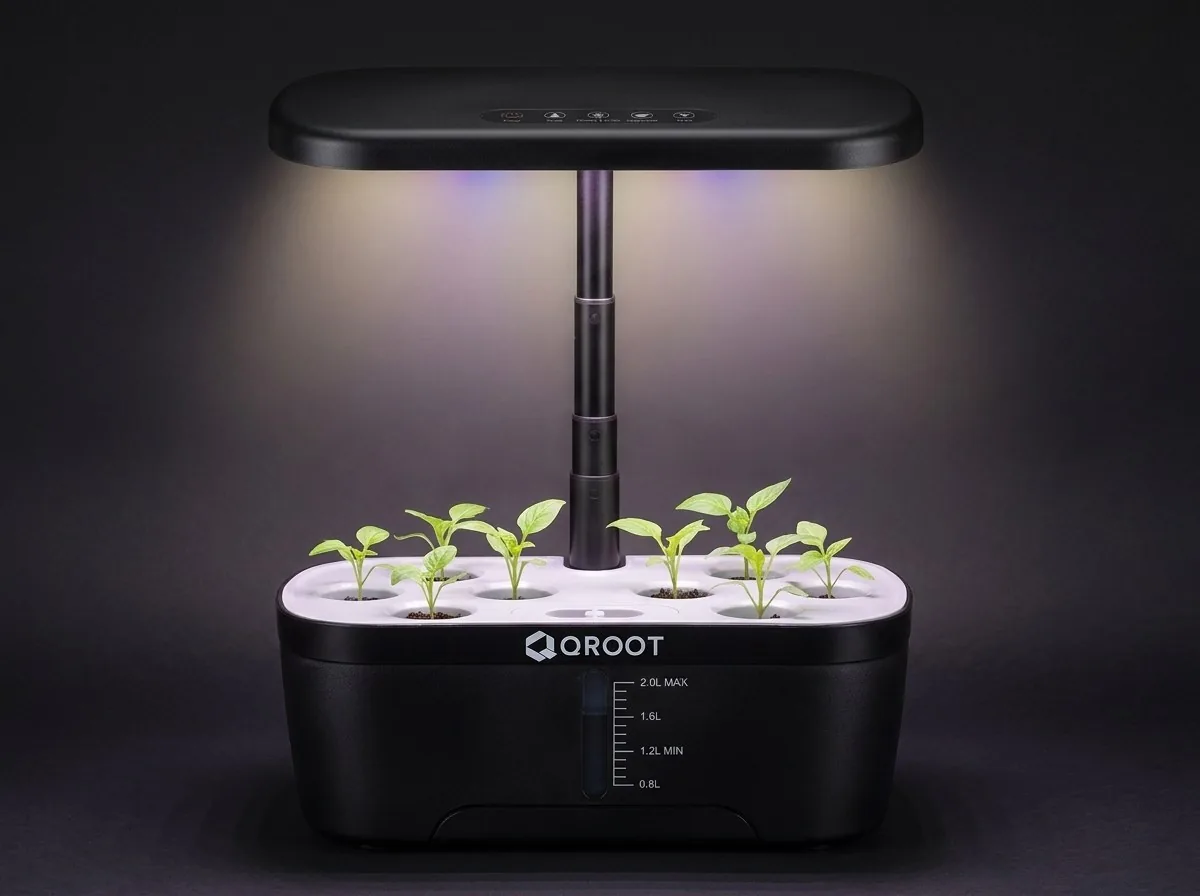
Five reasons your plants are growing slowly
QROOT gardens are designed to produce harvest-ready greens in about 4 weeks. If your plants are lagging behind that timeline, one of these five issues is almost certainly the cause. Work through them in order - the most common problems come first.
1. Old or low-quality seeds
This is the most common cause of slow growth, and the easiest to overlook. Seeds lose viability over time - a packet that's been sitting in a drawer for two years may have a germination rate of 30% instead of 90%. Even the seeds that do sprout will grow slower and produce weaker plants.
The fix: Buy seeds dated within the last 12 months. Store unused seeds in a cool, dry, dark place (a sealed container in the fridge works well). When planting, use 2-3 seeds per pod to improve your odds. Thin to the strongest seedling once they're established.
2. Light distance is wrong
The LED grow light needs to be close to the plants - ideally 10-15 cm above the tallest growth. If the panel is too far away, plants stretch toward it (becoming leggy and thin) instead of growing bushy and full. If it's too close, leaf tips can burn (brown, crispy edges).
The fix: On the QROOT Core, the lamp height is fixed, so this is rarely an issue unless the unit is placed under a shelf or cabinet that blocks light. On the Plus model, adjust the lamp arm height as plants grow. Check every week and raise it as needed.
3. Nutrients are depleted or unbalanced
Plants in a hydroponic system depend entirely on the nutrient solution for food. If the reservoir has been running for more than 3 weeks without a water change, the nutrients may be depleted or the mineral ratios may have shifted as plants consumed them unevenly.
The fix: Do a full reservoir change. Drain old water, rinse the reservoir, refill with fresh water and full-strength nutrients (one capful each of A and B). If you've been topping up with plain water, the nutrient concentration has been declining with each top-up - a full change resets everything.
4. Water temperature is too cold or too warm
Hydroponic plants grow best when the water temperature is between 18°C and 26°C. Below 18°C, root activity slows and nutrient uptake drops. Above 28°C, dissolved oxygen decreases and roots can develop problems.
In Indian homes, cold water temperature is rarely an issue except in hill stations during winter. Warm water is more common - especially if the garden is near a window getting afternoon sun or next to a heat-generating appliance.
The fix: Move the garden away from direct sunlight and heat sources. If the water feels noticeably warm, do a water change with room-temperature water. In very hot weather, change water more frequently (every 2 weeks instead of 3).
5. Root problems
Healthy roots are white and spread freely through the water. If roots turn brown, slimy, or smell unpleasant, root rot has set in - usually caused by a combination of warm water, low oxygen, and old nutrient solution.
The fix: Remove affected plants, trim any brown or slimy roots with clean scissors, and replant in fresh water with fresh nutrients. Clean the reservoir and pump before refilling. Prevent recurrence by maintaining regular water changes and keeping the garden in a cool spot.
When slow growth is normal
Not every plant hits that timeline. Some crops are just slower:
- Parsley: Germinates slowly (10-14 days) and takes 5-6 weeks to reach harvest size.
- Cherry tomatoes: 60-80 days from seed to fruit. See our cherry tomato growing guide.
- Kale: 5-6 weeks for full-size leaves, though baby kale is ready in 3-4 weeks.
If your basil, mint, lettuce, or rocket are slow, though - something above is the likely cause. Work through the list and you'll almost certainly find the fix.