
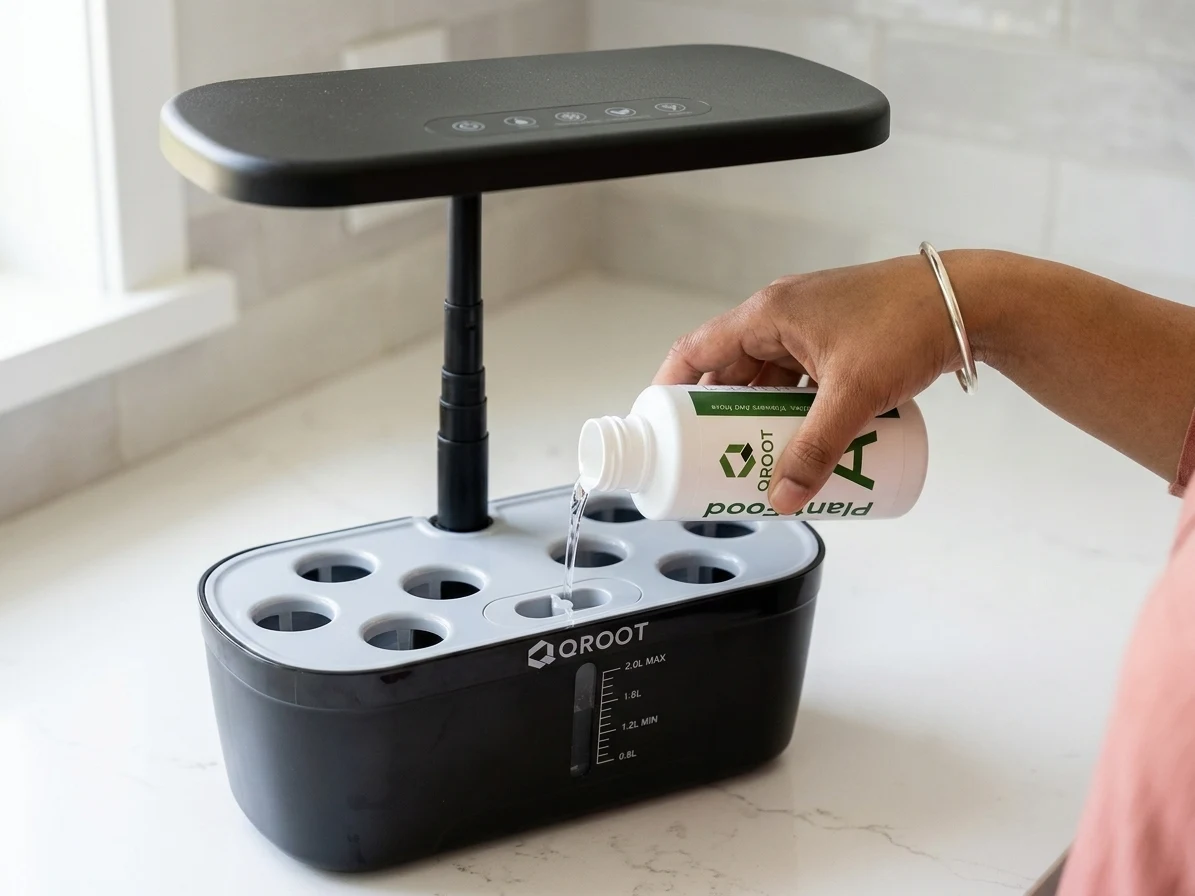
Understanding hydroponic nutrients
In soil, plants get their nutrition from decomposed organic matter, minerals, and microorganisms. In a hydroponic garden like QROOT, you provide those nutrients directly through the water. That's what the two bottles in your kit are for - Nutrient A and Nutrient B.
Why two bottles?
Hydroponic nutrients are split into two parts because certain minerals react with each other when concentrated. Calcium (in Nutrient A) and sulphates/phosphates (in Nutrient B) would form insoluble precipitates if mixed in concentrated form - basically, chalky gunk that your plants can't absorb. Keeping them separate until they're diluted in the reservoir prevents this.
Always add A first, stir, then add B. Never mix the concentrates directly together.
What's in each bottle
Nutrient A contains calcium nitrate and iron chelate. Calcium builds cell walls (strong stems), nitrogen drives leaf growth (more leaves, greener colour), and iron prevents chlorosis (yellowing leaves).
Nutrient B contains the rest: phosphorus (root development), potassium (overall plant health), magnesium (chlorophyll production), and trace minerals like manganese, zinc, boron, copper, and molybdenum.
How to dose
For a QROOT garden, the dosing is simple:
- Initial fill: Fill the reservoir with fresh water. Add one capful (5ml) of Nutrient A, stir. Add one capful of Nutrient B, stir.
- Top-ups: When the water level drops, add fresh water with half-strength nutrients (half a capful of each). Topping up with full-strength nutrients every time leads to over-concentration.
- Full change: Every 3 weeks, drain the reservoir completely, rinse it, and refill with fresh water and full-strength nutrients. This prevents mineral buildup and keeps the pH in range.
Spotting nutrient deficiencies
Your plants will tell you when something is off. Here are the most common signs:
- Yellowing lower leaves: Nitrogen deficiency. The plant is moving nitrogen from old leaves to new growth. Increase nutrient dosage slightly or do a full water change with fresh nutrients.
- Purple or reddish stems: Phosphorus deficiency. More common in cooler environments. Ensure nutrients are properly dosed and the water temperature is above 18°C.
- Brown leaf edges: Potassium deficiency or nutrient burn (too much fertiliser). If you've been topping up with full-strength nutrients, flush the reservoir with plain water for a day, then refill at normal strength.
- Yellowing between leaf veins (veins stay green): Iron or magnesium deficiency. Usually fixed by a full reservoir change with fresh nutrients.
- Slow, stunted growth: Could be overall nutrient depletion. If the water has been in the reservoir for more than 3 weeks without a change, it's time for a full refresh.
Water quality matters
Tap water works fine in most Indian cities. If your tap water is very hard (leaves white mineral deposits on surfaces), consider using filtered water or letting tap water sit uncovered for 24 hours before use - this allows chlorine to evaporate. RO water works but may need slightly higher nutrient doses since it starts with zero minerals.
When to buy replacement nutrients
The bottles included with your QROOT last about 3 months with regular use. After that, any standard two-part hydroponic nutrient solution works. General Hydroponics Flora series, available on Amazon India for ₹300-500, is a reliable choice. Follow the same A-first-then-B dosing method with any brand.