
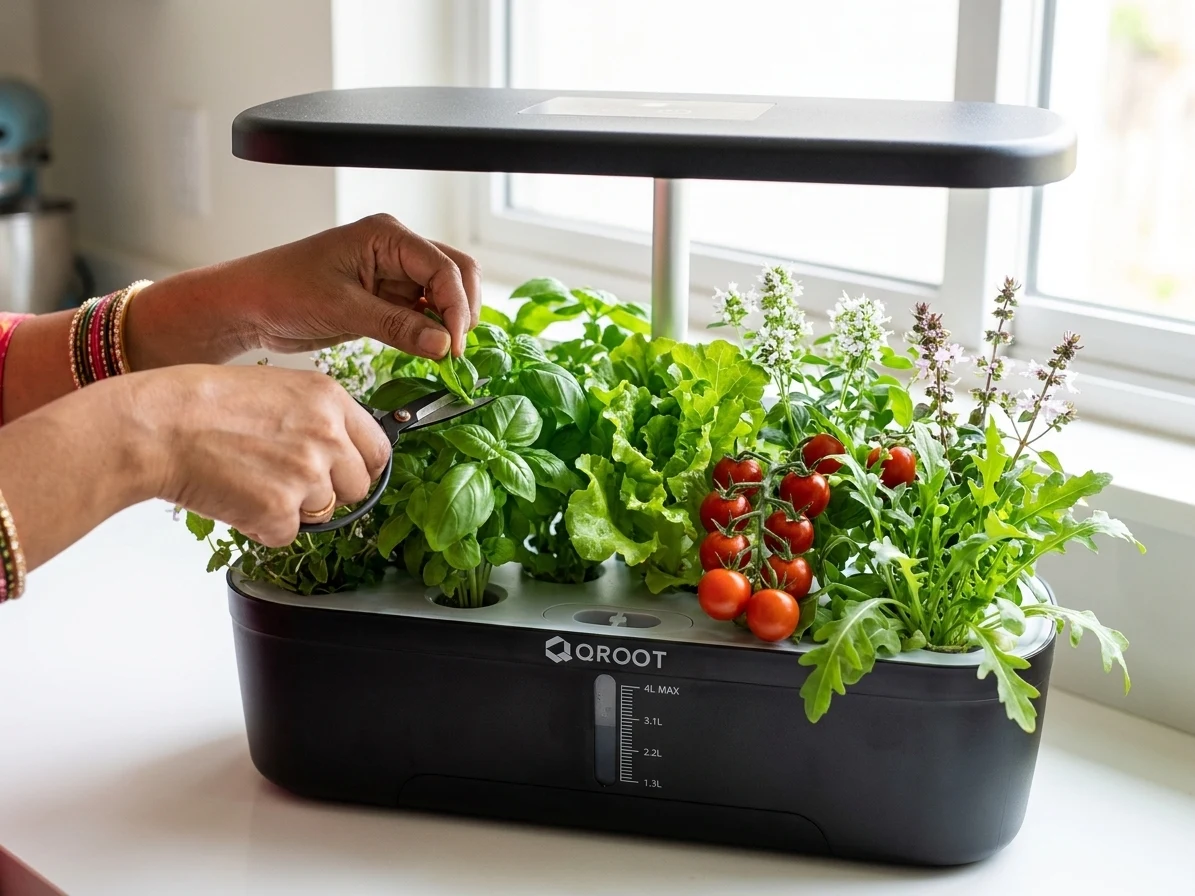
Can you really grow tomatoes in a countertop garden?
Yes - with a few caveats. Cherry tomatoes are the one fruiting crop that works reliably in a QROOT hydroponic garden. They take longer than herbs (60-80 days vs 21), need manual pollination since there's no wind or bees indoors, and they'll eventually outgrow the garden. But the payoff is worth it: vine-ripened cherry tomatoes that taste nothing like the ones from the store.
Choosing the right variety
Not all tomato varieties suit indoor hydroponic growing. Look for determinate (bush) varieties that stay compact:
- Tiny Tim - The classic indoor tomato. Grows to about 30 cm tall, produces clusters of sweet red cherries. Perfect for QROOT.
- Red Robin - Even more compact than Tiny Tim, reaching just 20 cm. Ideal if you want tomatoes without sacrificing too many pods.
- Micro Tom - The smallest tomato plant in the world. Grows to 15 cm and produces miniature fruits. More of a novelty, but it works.
- Yellow Pear - A semi-determinate variety that produces sweet yellow pear-shaped fruits. Slightly larger plant, may need the Plus model's adjustable lamp arm.
Avoid indeterminate (vining) varieties like Sweet 100 or Sungold - they grow too tall and won't fruit properly in a countertop setup.
Setup and planting
Tomatoes are heavier feeders than herbs, so give them the best conditions:
- Use 1-2 pods per plant, max. Tomatoes need room. If you're dedicating your QROOT to tomatoes, plant 2-3 and leave the other pods capped.
- Increase nutrients. Once the plant starts flowering, increase to 1.5× the normal nutrient dose. Tomatoes need more potassium and phosphorus during fruiting.
- Support the plant. Even dwarf varieties can get top-heavy with fruit. A small bamboo stake or twist tie to the lamp arm prevents the plant from toppling.
The pollination problem
This is the biggest difference from growing herbs. Herbs produce leaves - no pollination needed. Tomatoes produce flowers that need to be pollinated to set fruit. Outdoors, wind and bees handle this. Indoors, you're the pollinator.
How to pollinate: When flowers appear (usually around day 30-40), gently shake the stem or tap the flower cluster with your finger. Do this every 2-3 days. Alternatively, use a small paintbrush or cotton swab to transfer pollen between flowers. You'll know it worked when the flower petals drop and a tiny green tomato appears behind them.
Timeline
- Days 1-7: Germination. Tomato seeds sprout in 5-10 days.
- Days 8-28: Vegetative growth. The plant builds stems and leaves.
- Days 28-45: Flowering. Small yellow flowers appear in clusters.
- Days 45-60: Fruit set and growth. Green tomatoes form and slowly swell.
- Days 60-80: Ripening. Fruits turn from green to their final colour. Harvest when fully coloured and slightly soft to the touch.
Common issues
- Flowers drop without setting fruit: Pollination failed. Shake more vigorously or use the paintbrush method. Low humidity can also cause flower drop - mist the flowers lightly.
- Leaves curling upward: Usually heat stress or over-concentration of nutrients. Check that the garden isn't near a heat source and do a reservoir change.
- Blossom end rot (black bottom on fruits): Calcium deficiency. Ensure Nutrient A is properly dosed and the pH is in range.